Fintech · Jan to Aug
34%Fintech took 34% of the money: $763m of $2.24bn.
FintechThe rest
Welcome to the Founding MENA newsletter, bringing you the top stories from across the region every week.
I hope you find the newsletter insightful, but I’m always open to feedback and suggestions. Let’s get into it!
Stitch raised $25M Series A led by a16z, bringing total funding to $35M.
a16z doesn't make "test" investments in new regions. When they enter a market for the first time, they're signalling conviction in the entire ecosystem, not just one company.
Their first Southeast Asia bet was Gojek. Their first India bet was Rapido. Their first Latin America bet was Nubank.
Now their first GCC bet is Stitch, a Riyadh-based fintech building the operating system for modern financial institutions.
Financial institutions worldwide are running on infrastructure that should have been replaced 20 years ago.
Everyone wants to deploy AI. Nobody wants to admit their core banking system was built when Bush was president.
The traction that got a16z's attention:
Stitch is already operating in GCC, Africa (including Egypt and Kenya), and Southeast Asia.
Read more here.
Ninja just tapped Citi, Goldman Sachs, Riyad Capital, and UBS to lead a potential $1 billion IPO in Riyadh, targeting end of 2026 or early 2027.
The Saudi quick-delivery startup is pressing ahead with listing plans despite ongoing regional uncertainty.
If executed, this would be one of the largest tech IPOs in MENA history and a major liquidity event for the region's delivery ecosystem.
$1 billion valuation at IPO would put Ninja among the most valuable delivery platforms built in the Middle East, competing with established players like Talabat (acquired by Delivery Hero), Careem (acquired by Uber), and Hungerstation.
Targeting the end of 2026 or early 2027 gives Ninja runway to demonstrate continued growth, shore up unit economics, and navigate any geopolitical volatility that could impact market conditions.
Saudi Arabia's IPO pipeline has been heating up. The Tadawul is attracting more tech listings as the Kingdom positions itself as the region's primary public markets destination for growth companies.
If Ninja executes at $1B, it sets a benchmark for other regional delivery and logistics platforms considering public listings.
No comment from Ninja or the banks involved.
Read more here.
QSTP (part of Qatar Foundation) just announced their fund alongside the first cohort of global co-investment partners: Global Ventures, Golden Gate Ventures, White Star Capital, VentureSouq, and Builders VC.
The thesis is simple: the most important companies of the next decade will be deep tech startups with measurable social or climate impact.
But here's what makes this different from every other corporate VC fund in the region. Most funds write a check and hope the startup figures out distribution. QSTP is inverting this.
They're requiring every portfolio company to be headquartered in Qatar with core operations locally, then bringing global VCs alongside every deal to unlock international markets.
So a deep tech startup based in Qatar gets local capital from QSTP plus global capital and networks from VCs spanning WANA, Southeast Asia, North America, Europe, and Asia in a single round.
The target sectors are: AI, ML, robotics, biotech, advanced materials, EdTech, HealthTech, CleanTech, AgriTech, PropTech, smart infrastructure, aviation tech, and mobility.
Qatar has been building coordinated capital infrastructure across QIA's Fund of Funds program (Builders VC), QSTP's research and innovation ecosystem, and now this $30M fund with pre-negotiated global co-investment partners.
Read more here.
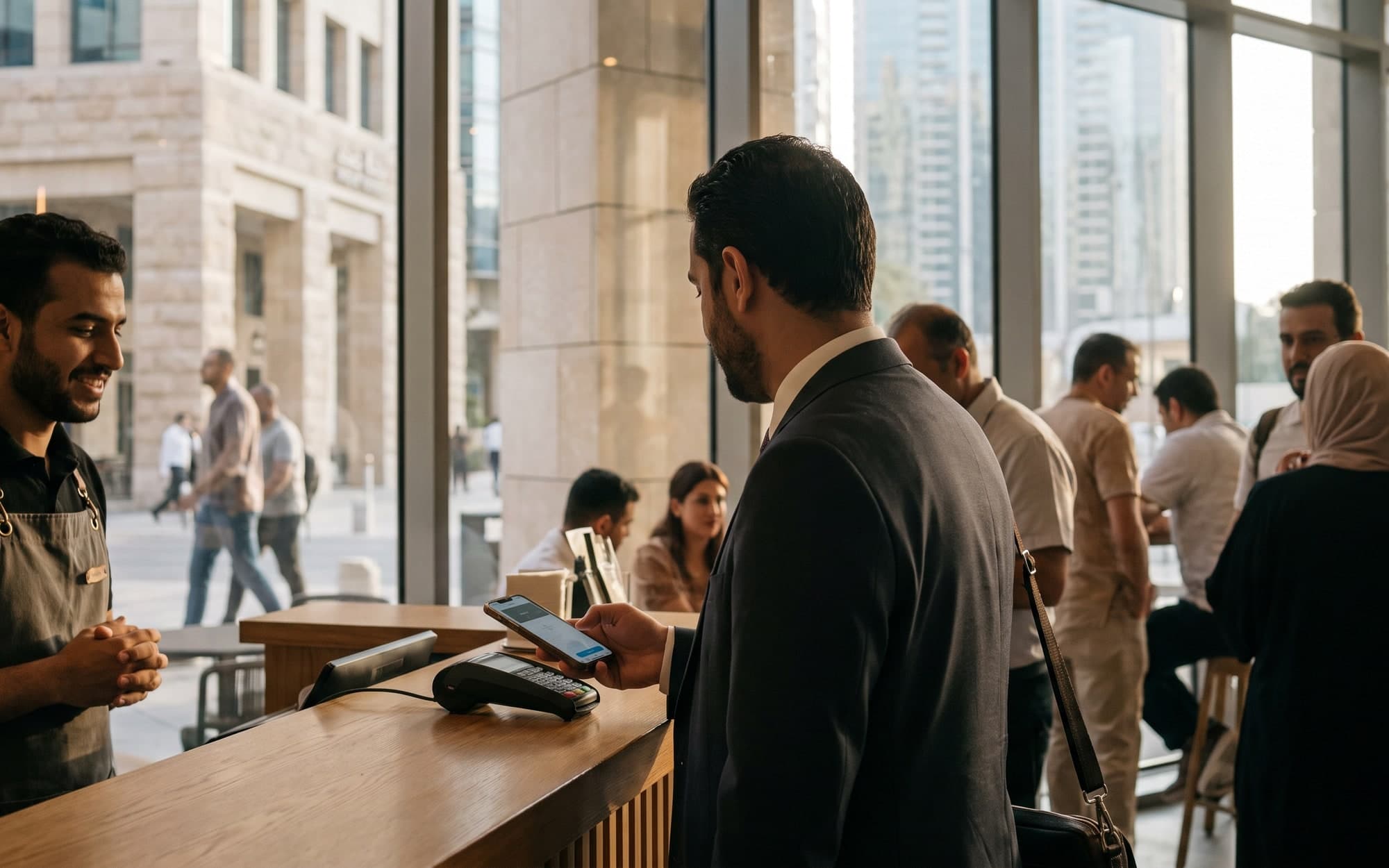
For 13 years, Syria has been financially isolated. No Visa. No Mastercard. No international payments. Cash economy. Remittances through informal channels. Businesses operating entirely offline.
The Central Bank of Syria has announced the restoration of credit card services as part of broader efforts to rejoin the global financial system.
What this unlocks:
Syria's tech ecosystem has been frozen for over a decade. Talented engineers left. Founders couldn't raise capital. Startups couldn't process payments. The entire digital economy was severed.
Credit card restoration doesn't fix everything overnight, but it's the prerequisite for everything else.
You can't build a startup ecosystem without payment rails. You can't attract investment without banking integration. You can't scale businesses without digital infrastructure.
This is the beginning of Syria's economic reintegration. Expect more infrastructure to come online over the next 12-24 months as the government rebuilds financial connectivity.
Read more here.
MENA VC deployment grew 3.5x in 5 years: $1.1B (2020) → $3.8B (2025).
But liquidity infrastructure didn't keep pace. Early shareholders, founders, and employees are sitting on valuable equity with no exit path. IPOs are tight. M&A takes years.
Key Capital is MENA's first dedicated VC secondaries fund (ADGM regulated) The $50M fund focuses on buying positions from angels, founders, employees through off-cap-table transactions. Already closed 2 deals.
When early backers and employees can access liquidity before exit, capital recycles faster into new deals. Ecosystem velocity increases. Talent can monetise equity sooner.
Globally, secondaries are institutional ($240B volume). MENA is catching up.
Read more here.
Founding MENA has partnered with CapQuest, MENA’s leading equity management platform.
CapQuest’s automatic SAFE tracker is a game-changer. Upload all your SAFEs at once and it instantly models dilution, tracks valuations, and turns fundraising scenarios from a spreadsheet nightmare into something you can run in minutes.
All of our readers can get 20% off their first year with CapQuest using the code: scalingmena20.
That’s all for this week, thanks! All of our MENA based readers: please stay safe. Sam
Fintech took 34% of the money: $763m of $2.24bn.
First published 18 May 2026 on Substack
The week in MENA tech, every Monday. Free.