Why ALBAIK Is Still So Hyped
For many Saudis, ALBAIK is more than somewhere to grab fried chicken.
The chain has been around since 1974, survived wave after wave of global fast-food competition, and somehow remained one of the most talked-about food brands in the country. New branches still draw crowds. Travellers still carry its orange bags through airports. Pilgrims still come home talking about it.
And the popularity is not just anecdotal. In YouGov’s 2026 Saudi QSR rankings, ALBAIK had a 54.5% consideration score, ahead of Al Tazaj at 32.7%, McDonald’s at 26.9% and KFC at 23.2%. It also led the category on perceived quality and value.
So why has a fried-chicken chain stayed this culturally dominant for more than five decades?
It created a taste people crave specifically
ALBAIK was an early mover in broasted chicken in Saudi Arabia, giving it time to establish a recognisable flavour before the category became crowded.
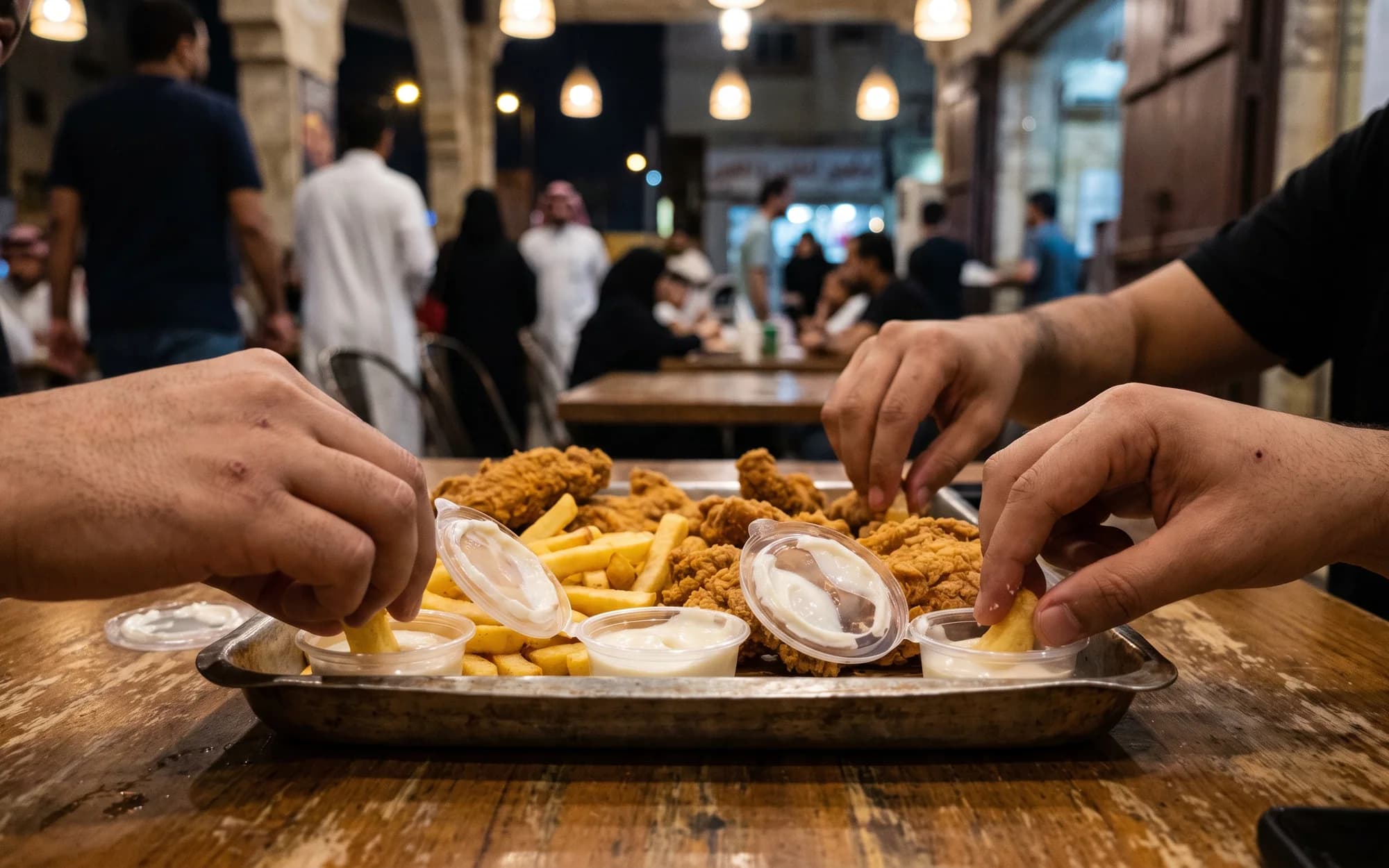
Its appeal comes from the full combination: seasoned pressure-fried chicken, bread, fries, spicy variants and, especially, its garlic sauce.
Someone craving ALBAIK may not consider another fried-chicken restaurant an equivalent substitute. Competitors can sell the same category of food, but reproducing the exact taste profile customers associate with ALBAIK is much harder.
That is one reason the brand has been able to stay relevant even as Saudi Arabia’s fast-food market became far more competitive.
Value has always been part of the appeal
ALBAIK was built around the idea of serving good food at prices that ordinary customers could afford.
Its original proposition combined quality, affordability, speed, courtesy and cleanliness. The intention was to make the meal accessible to students, workers, families and pilgrims rather than position it as an occasional premium purchase.
That perception has lasted.
In 2026, ALBAIK still ranked first in Saudi Arabia for perceived value.
The strength of that positioning comes from the full equation: price, portion size, familiar taste and reliability.
A competitor has to match all of those at once.
Scarcity helped turn it into a legend
For much of its history, ALBAIK was not widely available across Saudi Arabia.
It was concentrated largely in Jeddah, Makkah and Madinah, with expansion into cities such as Riyadh and Dammam coming much later.
That limited availability created behaviour most restaurant chains would struggle to manufacture deliberately.
People planned stops around ALBAIK when travelling through western Saudi Arabia. Friends carried boxes home for people who could not get it where they lived. Eating it became part of the experience of visiting Jeddah, Makkah or Madinah.
The brand built demand before it built national distribution.
By the time ALBAIK became easier to find, decades of stories and rituals had already accumulated around it.
Hajj and Umrah gave the brand global word of mouth
ALBAIK also had access to an audience few restaurant chains could replicate.
Its presence in Makkah, Madinah and Mina meant millions of Hajj and Umrah pilgrims encountered the brand during some of the most memorable journeys of their lives.
At one point, an ALBAIK operation in Mina was reported to serve around 250,000 meals in a single day during Hajj.
CEO Rami Abu Ghazaleh has spoken about how the food becomes attached to pilgrims’ memories of those journeys. They then return home and recommend it to family and friends.
That created international awareness long before ALBAIK had a major international footprint.
A competitor can open beside a holy site today. It cannot recreate decades of earlier pilgrimages in which ALBAIK was already part of the experience.
It became tied to Saudi nostalgia
ALBAIK has now existed long enough to span generations.
Parents who first ate there when modern fast food was still relatively new in Saudi Arabia can now take their children and grandchildren.
That turns ordinary repeat business into inherited habit.
The company appears to understand this very well. Abu Ghazaleh has even pointed to small sensory cues, such as keeping the scent of ALBAIK’s wet wipes consistent because it reminds customers of earlier gatherings and experiences.
The food is therefore carrying memories alongside flavour.
That makes the brand much harder to replace than a restaurant whose relationship with customers is purely transactional.
Being Saudi matters too
ALBAIK also occupies an unusual position as a homegrown brand that became more culturally prominent than many global fast-food chains.
Its identity is closely tied to Jeddah and to several generations of Saudi life.
That gives customers another reason to feel attached to it: buying ALBAIK can carry a sense of familiarity and pride in a Saudi-born business.
The strength of that brand equity has shown up beyond restaurant rankings. ALBAIK ranked among Saudi Arabia’s strongest consumer brands in earlier YouGov studies as well.
The crowds keep reinforcing the hype
Popularity also feeds on itself.
ALBAIK has repeatedly generated unusually visible queues, including long lines at Expo 2020 Dubai and a reported vehicle queue stretching around four kilometres at a Tabuk drive-through opening.
Those crowds become advertising.
Someone seeing hundreds of people waiting naturally assumes there must be something worth trying. Social posts amplify the effect, and first-time visitors begin to treat eating ALBAIK as part of the experience of visiting Saudi Arabia.
The hype generates more curiosity, which generates more crowds, which validates the hype again.
Younger customers are buying into it too
The brand is not surviving only because older Saudis remember it fondly.
In 2026, ALBAIK ranked first in dining-brand consideration among Gen Z, Millennials and Gen X.
Its consideration score was 48.4% among Gen Z, 54.6% among Millennials and 62.1% among Gen X.
That matters because nostalgia-heavy brands can fade as their original customers age.
ALBAIK appears to have transferred its appeal to younger customers through family habit, social proof, value and continued product recognition.
Why the hype survived the expansion
ALBAIK is no longer genuinely scarce.
By 2025, it operated more than 160 licensed restaurants, meaning the old explanation of “people want it because they cannot get it” is no longer enough.
Scarcity helped create the mythology.
What keeps that mythology alive now is everything that accumulated around it: a distinctive taste, affordable pricing, decades of familiarity, pilgrimage memories, family rituals and Saudi cultural identity.
That combination is difficult to copy quickly.
A new competitor can sell broasted chicken.
It cannot manufacture 50 years of memories around it.
Mentioned in this article

The week in MENA tech, every Monday. Free.
Keep pulling this thread