Fintech · Jan to Aug
34%Fintech took 34% of the money: $763m of $2.24bn.
FintechThe rest
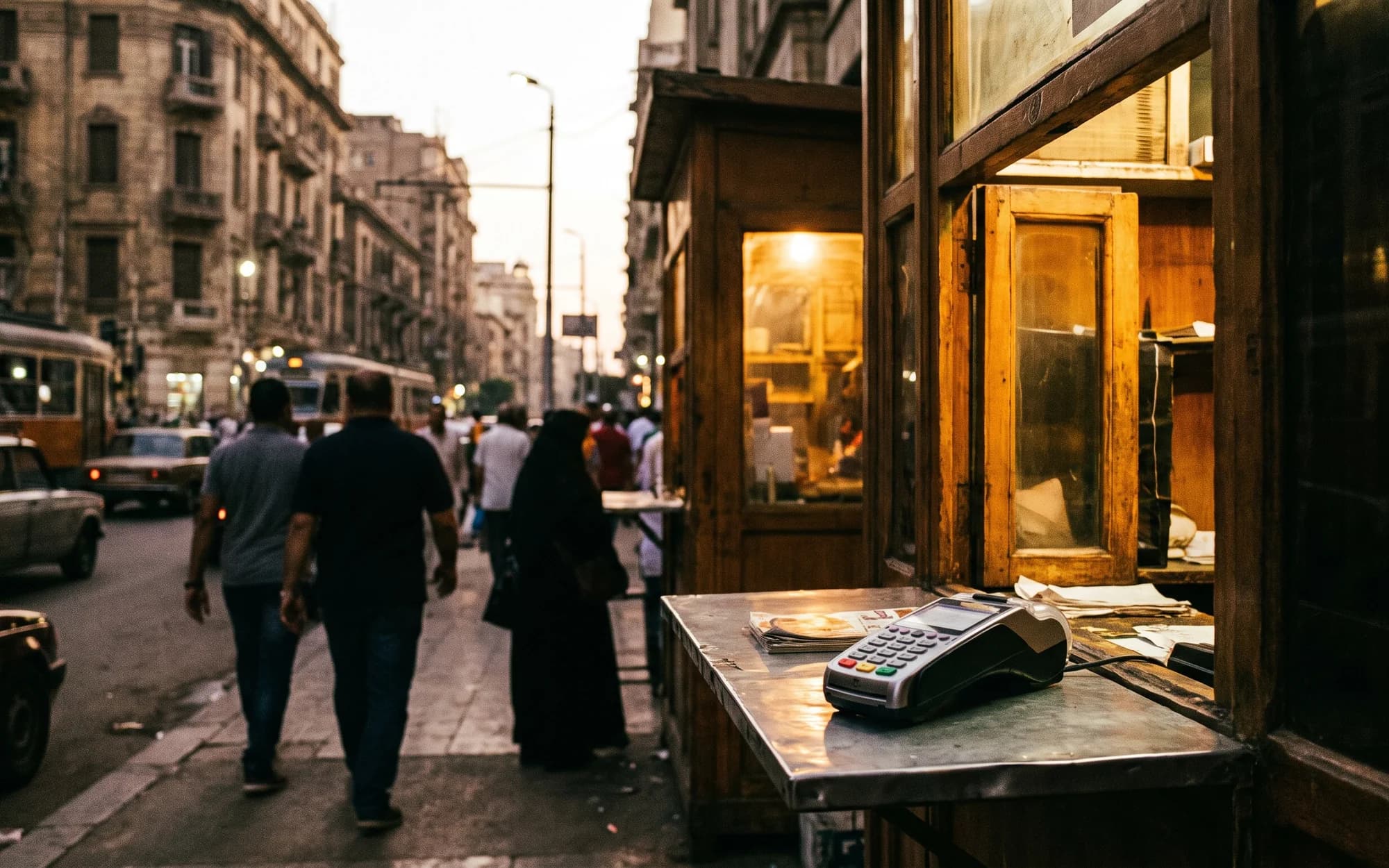
Egypt has produced an outsized share of the Middle East’s biggest fintech companies.
Fawry, MNT-Halan, Paymob, Thndr, Valu and MoneyFellows all came out of the same market, even though Egypt has far less venture capital and consumer spending power than the Gulf.
The reason is that Egypt combined something unusually valuable for fintech founders: a huge population, widespread financial friction, cheap technical talent and enough regulatory support to turn local problems into scalable businesses.
In 2025, Egypt supplied 12 companies to Forbes Middle East’s Fintech 50, just one behind the UAE, and four of the regional top ten.
Egypt’s first advantage was simply scale.
With a population above 100 million and a dense urban market, fintech companies could reach millions of users, merchants and businesses without leaving the country.
But the bigger opportunity came from how underserved that market was.
Financial inclusion rose sharply from 17.1 million transaction-account holders in 2016 to 48.1 million by June 2024, but millions of eligible Egyptians still remained outside the formal financial system.
Cash was still deeply embedded in everyday life. Informal commerce was widespread. Credit was difficult to access. Investing was cumbersome. Many small businesses were poorly served by banks.
For founders, those frictions created large problems with obvious demand.
Some of the strongest Egyptian fintechs succeeded because they did not simply copy models from other markets.
They adapted finance to how Egyptians already lived and transacted.
Fawry is one of the clearest examples. Instead of assuming consumers would move immediately to cards, it built a system that connected banks and billers while still allowing cash-paying customers to use local kiosks.
MoneyFellows digitised the gam’eya, the rotating savings circles already used by families and communities across Egypt. By 2025, the company reported more than 8.5 million users.
Thndr tackled another local barrier: investing. Traditional brokerage accounts involved branches, minimum balances and complexity, so the company built a mobile-first route into equities and other investments. In 2024, it accounted for 82.5% of new investor codes on the Egyptian Exchange.
Paymob came from a similar frustration. Its founders originally wanted to build an e-commerce company, but found that Egypt’s payment infrastructure could not support what they needed. They ended up building the payment layer instead.
Egypt also had a combination that was particularly useful for fintech: high digital connectivity alongside persistent cash dependence.
By July 2025, the country had more than 90 million mobile-internet subscriptions.
That meant millions of people could access financial services digitally even if they were still poorly served by traditional banks.
Fintech companies did not need Egypt to become completely cashless first.
They could digitise one layer at a time: bill payments, merchant acceptance, wallets, lending, investing or savings.
That helped companies build large businesses around the transition itself.
Egypt’s large informal economy also created demand for services traditional banks struggled to provide.
The informal economy was estimated at 32% of GDP in 2018, while only around 400,000 of an estimated two million bank-finance-eligible small businesses were receiving loans in the OECD data cited in the report.
That opened space for alternative underwriting, microfinance, merchant payments and other products designed for customers without conventional financial histories.
MNT-Halan built around exactly this market.
Its roots were in mobility and microfinance, serving motorcycles, tuk-tuks and businesses operating in Egypt’s informal economy. It later expanded into lending, wallets, payments and commerce.
The operational difficulty actually became part of the advantage.
Years of repayment data, merchant relationships, collections and local risk knowledge are much harder to replicate than simply launching another app.
Fintech is unusually labour-intensive.
Beyond engineers, companies need compliance teams, risk analysts, customer support, collections, sales and operations.
Egypt had the talent pool to supply all of them.
Its universities produce more than 667,000 graduates annually, while engineering costs can be as much as 60% lower than in GCC markets.
That allowed companies to build large teams while still serving customers with relatively low transaction values.
The same cost structure also made Cairo useful as a regional engineering and operations base once those companies began expanding abroad.
Egypt’s fintech ecosystem did not emerge because regulation was always easy.
It became more supportive over time.
The 2020 banking law formalised regulation of payment systems and payment-service providers, while later legislation created a framework for fintech across non-bank financial services such as consumer finance, insurance and leasing.
Regulators also introduced sandboxes, digital identity rules and new licensing pathways.
That mattered because financial startups cannot scale on product alone. They need permission to operate.
As licensing became clearer, regulatory approval itself became an advantage for companies that had already navigated the system.
Egyptian fintech also developed alongside the existing financial sector.
By 2023, half of Egypt’s 36 banks and four national financial-infrastructure providers had a full or partial fintech strategy, while more than 60 collaboration agreements had been signed between financial institutions and fintech companies.
Banks supplied things startups often lack: balance sheets, licences, customers and credibility.
That was particularly important for lending businesses.
Payments companies can grow from transaction fees, but credit platforms need funding, underwriting and collections infrastructure. Partnerships with banks and established financial groups helped make those models possible.
Fawry was founded in 2008 and became one of the region’s earliest examples of a locally built fintech reaching national scale.
That created a precedent.
It showed investors that a large Egyptian fintech could exist, gave regulators experience with digital finance and trained employees who understood payments, merchant acquisition, compliance and financial infrastructure.
Over time, that experience spread across the ecosystem.
Egypt began producing fintech leaders in payments, lending, investing, savings, consumer finance and financial infrastructure rather than relying on a single standout company.
By 2023, the country had 177 fintech companies and payment providers across more than 14 subsectors.
Egypt’s advantage has not been that it attracts the most fintech funding.
Increasingly, that role belongs to the UAE and Saudi Arabia.
Egypt’s strength has been producing companies with large customer bases and proven operating models. The Gulf then provides deeper capital pools and higher-spending markets.
Paymob is a good example.
By September 2026, it had raised more than $125 million, including a $35 million round co-led by Mubadala and the EBRD. Its GCC revenue had grown sevenfold and was approaching half of total revenue.
The pattern is becoming increasingly clear: build and prove the model in Egypt, then use Gulf capital and markets to scale it further.
Egypt gave founders something richer markets could not easily replicate.
It offered a huge population, difficult financial problems, millions of underserved consumers and merchants, a large talent pool and enough digital adoption to build modern financial products around an economy still transitioning away from cash.
Those constraints forced companies to become unusually good at localisation, distribution and operating in messy markets.
Fawry figured out how to digitise bills without excluding cash users.
MNT-Halan learned how to serve people traditional banks struggled to underwrite.
MoneyFellows turned an informal savings habit into a digital product.
Thndr simplified investing.
Paymob built payment infrastructure around a fragmented merchant market.
That is why Egypt became such a strong fintech factory.
Its biggest companies were built by solving problems that were difficult, frequent and experienced by millions of people.
Fintech took 34% of the money: $763m of $2.24bn.

 EgyptFintech
Egyptian app for investing in stocks, bonds and funds from small amounts
 EgyptFintech
Egyptian fintech offering loans, payments and e-commerce to underbanked customers
EgyptFintechEgypt's largest electronic payments network for bills, cards and shop payments
The week in MENA tech, every Monday. Free.