Fintech · Jan to Aug
34%Fintech took 34% of the money: $763m of $2.24bn.
FintechThe rest
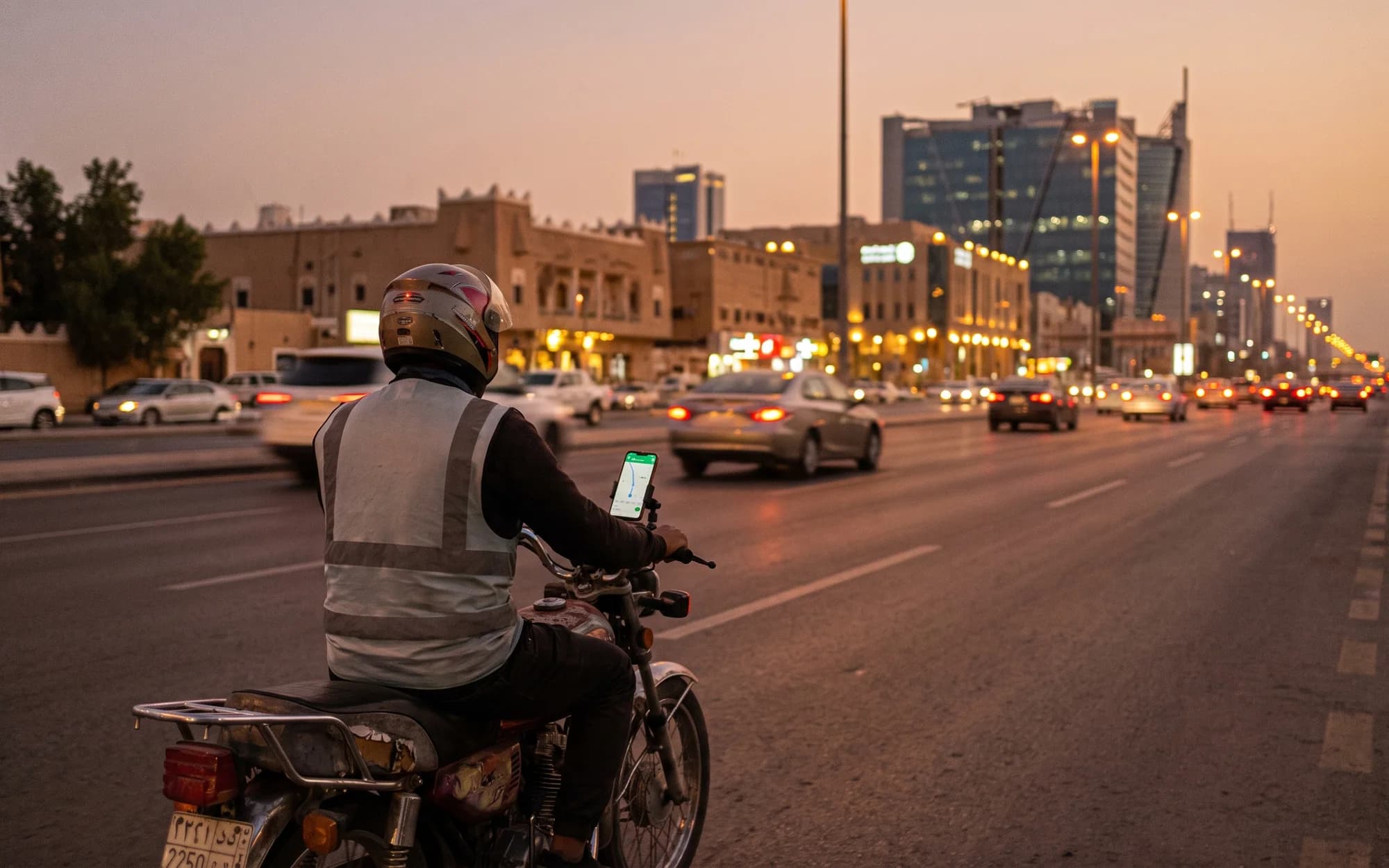
The Middle East has become unusually fertile ground for super apps.
The reason is fairly simple: millions of consumers already live through their phones, but many of the services they use every day are still fragmented across different apps.
Transport sits in one place. Food delivery in another. Payments, remittances, groceries, government services and home services often sit somewhere else.
For regional companies, that fragmentation creates an opportunity. Once a platform already owns a frequent customer habit, it can reuse the same users, payments infrastructure, logistics network and customer data to expand into adjacent services far more cheaply than starting from scratch.
That is why companies such as Careem, Botim and Halan have all followed different versions of the same playbook.
A super app only works if consumers are already comfortable managing large parts of their lives through a smartphone.
The Middle East has that foundation.
By the end of 2023, MENA had 427 million mobile subscribers and 327 million mobile-internet users. Smartphone penetration is particularly high in Gulf markets, reaching an estimated 99% in the UAE, 95% in Saudi Arabia and 91% in Qatar.
That gives companies an enormous digital audience to build on.
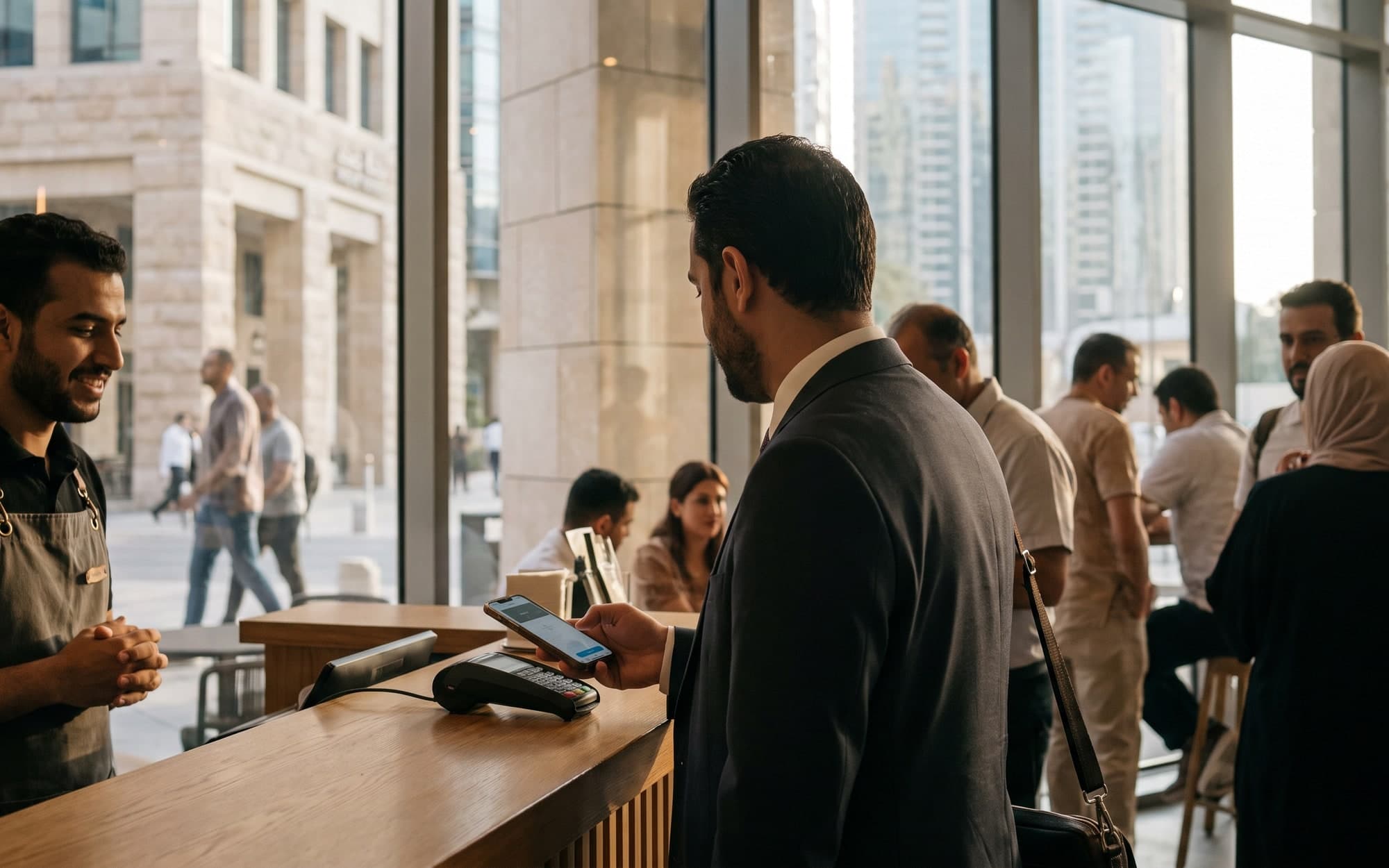
It also means adding another service to an app consumers already use can be easier than convincing them to download, register and pay through an entirely new platform.
The strongest super apps usually do not begin by trying to offer everything.
They start with one high-frequency service.
A ride-hailing company, for example, already has customers, drivers, location data, routing systems, payments, fraud controls and customer support. Much of that infrastructure can then be reused for food delivery, groceries, parcels or financial services.
Careem followed exactly that path.
It expanded from rides into food, groceries, payments, micromobility and other partner services, while its subscription programme ties benefits across several categories together.
The more services a customer uses, the more valuable the relationship becomes. A user who first opens the app for a ride can later become a food customer, a grocery customer or a payments user without the company having to acquire that person again.
The super-app model becomes especially powerful where smartphone ownership is much higher than formal financial inclusion.
Across lower- and middle-income Arab economies, around 90% of adults own a phone, but only about 40% had a financial account in 2024. Fewer than 30% had made or received a digital payment.
That leaves a large gap for consumer platforms to fill.
Egypt's Halan is a good example. It started with mobility and delivery, then expanded into lending, payments, buy-now-pay-later, e-commerce and merchant services.
In that model, finance becomes much more than another feature. The wallet, credit product or payment layer can connect several different parts of the customer's activity inside the same ecosystem.
The Gulf also has a consumer need that is particularly well suited to this model: millions of expatriates regularly move money and manage financial tasks across borders.
That includes remittances, mobile top-ups, bill payments, insurance and other recurring services.
Botim shows how that can turn a communications app into a much broader platform.
After Astra Tech acquired it, Botim expanded from calls and messaging into areas including payments, remittances, bills, insurance and other financial services. By 2026, some of its major remittance corridors included India, Pakistan, the Philippines and Egypt.
The starting habit was communication. The company then layered transactions that were already closely connected to the lives of the same users.
The same behaviour is visible in the public sector.
Gulf governments are increasingly combining services that once sat across separate departments into unified digital platforms.
Abu Dhabi's TAMM, for example, brings together more than 1,100 services across 90 public and private entities for 3.6 million users.
Residents can increasingly expect identity, payments, licensing, utilities and other government interactions to happen through a single digital interface.
That helps normalise the basic super-app idea: one account becoming the gateway to many different parts of everyday life.
Building a super app is expensive.
Companies need technology, licences, logistics, payments infrastructure and sometimes acquisitions to enter new categories.
The Middle East has several large corporate and sovereign-linked investors capable of funding that expansion.
Uber acquired Careem for $3.1 billion, while e& later invested $400 million in Careem's super-app business. Astra Tech took a different route, acquiring Botim, PayBy and Rizek to combine communications, fintech and home services inside a larger ecosystem.
In that sense, the region's super-app boom is also a consolidation story.
Instead of building every service internally, companies can acquire existing businesses and plug them into a shared customer and technology base.
There is also a strong economic reason companies keep pursuing the model.
Single-service businesses eventually run into limits.
Ride-hailing and delivery are expensive to operate. Communications apps can struggle to monetise users. Lending businesses can be cyclical.
Adding payments, subscriptions, merchant services and adjacent transactions gives companies more ways to earn from customers they have already spent money acquiring.
The real advantage is therefore not simply having a long menu of services.
It is owning more of the customer's recurring activity while reusing the same infrastructure underneath it.
Careem starts with mobility. Botim starts with communication. Halan starts with underserved consumers and financial access. TAMM starts with government identity and transactions.
Different starting points, but the expansion logic is remarkably similar.
The Middle East sits in an unusual position.
It has the smartphone adoption, capital and digital infrastructure needed to support large platforms, while everyday commerce, finance and public services remain fragmented enough for aggregation to create real value.
That combination keeps producing the same strategic opportunity.
Find something people already use frequently. Build trust and distribution around it. Then use that relationship to move into the other transactions surrounding their daily lives.
Fintech took 34% of the money: $763m of $2.24bn.
The week in MENA tech, every Monday. Free.