Why So Many Indian Entrepreneurs Built Fortunes in the UAE
Some of the UAE’s biggest business empires were built by Indian entrepreneurs.
LuLu, Aster, major jewellery chains, education groups and construction businesses all grew out of the same broader pattern.
The reason goes much deeper than tax.
Indian entrepreneurs arrived into a country that was developing at extraordinary speed, serving a rapidly growing expatriate population and building industries that were still fragmented or undersupplied. Many then used the UAE as a base to expand across the Gulf, India, Africa and beyond.
The India-UAE business relationship started long before oil
Indian commercial ties with the Gulf predate the UAE itself.
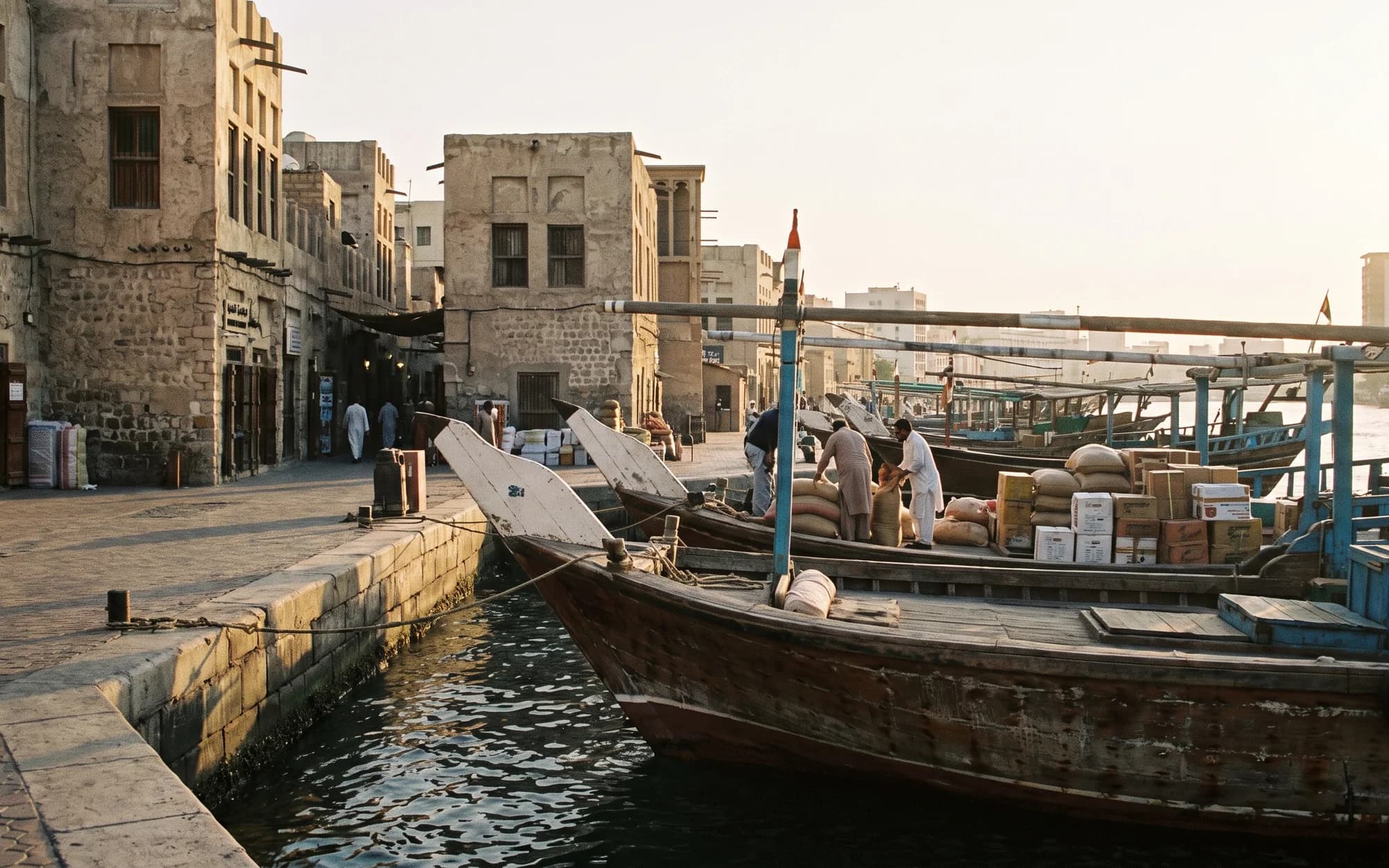
Merchants from Sindhi, Gujarati and other trading communities were active around Dubai Creek long before federation, trading products such as food, textiles, pearls and gold between India and the Gulf.
That history mattered.
By the time the UAE began developing rapidly after the discovery of oil, Indian traders already had supplier relationships, local knowledge and commercial networks in place.
Oil then accelerated everything.
Between the 1950s and 1980, the UAE experienced extraordinarily rapid growth as oil income funded roads, ports, buildings and public services while the country imported workers, managers and commercial expertise at scale.
For entrepreneurs arriving during that period, entire industries were still being built.
A huge Indian population created a ready-made market
Indian migration did not only supply labour to the UAE. It also created one of the country’s biggest consumer markets.
By 2024, around 4.3 million Indian nationals lived in the UAE, making Indians the country’s largest expatriate community.
That population created immediate demand for familiar food, jewellery, schools, healthcare, remittances, housing and other everyday services.
Indian founders also had another advantage: they understood that customer base.
They could recruit from India, source products through familiar supply chains and rely on family, hometown and professional networks to find staff, partners and early capital.
For many businesses, the Indian community became the first market.
The strongest companies eventually grew far beyond it.
LuLu, for example, evolved into a mass-market retailer serving the UAE’s much broader multinational population rather than remaining an Indian supermarket chain.
The biggest fortunes were built around basic UAE needs
Many Indian-founded businesses grew in sectors where demand rose almost automatically as the UAE added residents and infrastructure.
Retail was one of the clearest opportunities.
A growing expatriate population needed affordable groceries and household products. LuLu grew from a single operation in Abu Dhabi into the GCC’s largest pan-regional full-line retailer, with more than 240 stores when it listed in 2024.
Healthcare followed the same pattern.
Dr Azad Moopen opened a single clinic in Bur Dubai in 1987 after identifying unmet healthcare demand among expatriates. That business eventually became Aster DM Healthcare, spanning hospitals, clinics, pharmacies and diagnostics.
Private education expanded because expatriate families needed schools connected to Indian, British and other international curricula.
Construction and building materials benefited directly from the UAE’s infrastructure and property boom.
Jewellery benefited from Dubai’s existing role in the gold trade combined with strong South Asian demand. Indian-led businesses turned a fragmented market into large branded retail chains.
The pattern was consistent: enter an undersupplied category early, build trust and distribution, then expand as the country itself grows.
Dubai turned local businesses into regional ones
The UAE’s domestic market explains how many of these companies started.
Its connectivity explains how they became much bigger.
Jebel Ali linked businesses to more than 150 ports, while Dubai International handled 95.2 million passengers in 2025. India alone accounted for 11.9 million passengers, making it the airport’s largest country market.
That made Dubai much more than a place to sell products locally.
Indian founders could source from India, manage GCC operations from the UAE and distribute into Africa, Europe and other markets.
The commercial corridor kept getting deeper.
India-UAE trade reached $100.06 billion in FY2024-25, compared with just $180 million annually in the 1970s.
Businesses that started by serving UAE residents could therefore become regional trading, retail or service platforms.
The UAE made it easier to keep compounding
Tax helped, but mostly after the businesses were already working.
The UAE has no personal income tax, while federal corporate tax was only introduced for financial years beginning on or after June 2023, generally at 9% above the applicable threshold.
Free zones also gave foreign businesses advantages around trade, administration and ownership.
From 2021, reforms allowed 100% foreign ownership of most mainland businesses, removing the general requirement for a 51% Emirati shareholder in many sectors.
Those conditions made it easier for successful founders to retain capital and reinvest it into new stores, clinics, properties, factories or markets.
But many of the UAE’s best-known Indian business empires were already decades old by the time some of these newer policies arrived.
Their original advantage was timing and demand.
Why so many founders came from Kerala
Kerala stands out particularly strongly in the story of Indian entrepreneurship in the UAE.
The Malabar coast had long commercial links with Arabia, while large-scale Gulf migration accelerated from the 1970s. Over time, those migration flows created strong networks between Kerala and the UAE.
That made the next move easier.
New arrivals could find accommodation, jobs, suppliers, information and business introductions through people who had already established themselves.
Successful entrepreneurs then hired or financed others through overlapping hometown, family, alumni and professional networks.
Those networks reduced the cost and uncertainty of migration and business formation, helping explain why Kerala-origin founders became particularly visible in sectors such as groceries, healthcare, construction, education and jewellery.
The UAE rewarded founders who stayed for decades
Many of the biggest fortunes were built through long periods of reinvestment.
M.A. Yusuff Ali joined his family’s distribution business in Abu Dhabi in 1973. LuLu traces its founding to 1974. Decades later, its 2024 IPO raised AED 6.32 billion.
Azad Moopen started with one clinic in 1987 and expanded across healthcare categories and countries.
Joyalukkas opened its first UAE showroom in 1988 before growing into a regional jewellery chain.
These were businesses that compounded alongside the UAE itself.
As the population grew, their customer bases grew. As infrastructure improved, their distribution expanded. As the country became wealthier, they added new categories and moved into new markets.
Why the UAE produced so many Indian business fortunes
The UAE brought together several advantages at the same time.
Indian entrepreneurs had longstanding commercial links to the Gulf, a large expatriate customer base and familiar supply chains back to India.
They also arrived in a country growing exceptionally quickly, where sectors such as retail, healthcare, education, construction and jewellery still had room for large-scale operators.
Dubai then gave those businesses the infrastructure to expand far beyond the UAE.
The result became a reinforcing cycle: more Indian migration created more demand, Indian-run businesses made settlement easier, larger companies attracted more staff and suppliers, and the strongest firms used the UAE as a platform for regional expansion.
That combination, more than any single tax advantage, explains why so many Indian entrepreneurs built some of their biggest fortunes in the UAE.
The week in MENA tech, every Monday. Free.
Keep pulling this thread